
Common Spiders in Kentucky: Which Are Dangerous and When to Call a Pro
Most spiders found in Kentucky homes are harmless, but two species carry venom strong enough to require medical attention: the brown recluse and the southern black widow. The spiders homeowners most often encounter in fall are wolf spiders and cellar spiders, both of which look alarming but pose no serious threat. Knowing which spider you're actually looking at is the difference between a seasonal nuisance and a real concern, and knowing when spider activity signals a broader pest problem is when professional treatment becomes the right call.
The most common spiders in Kentucky homes
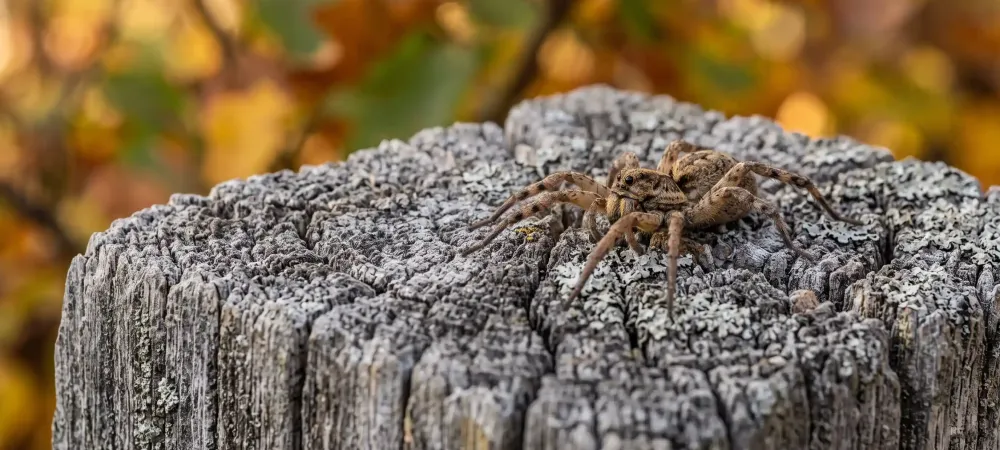
The spiders Kentucky homeowners see most often in fall are not the ones they fear most. Wolf spiders are probably the most startling encounter: large, fast, and often found running across floors in September and October as outdoor temperatures drop. Despite their size, wolf spiders are not medically significant. They don't build webs and they're not looking to bite; they're hunting insects.
Cellar spiders (often called "daddy long-legs") show up in basements, garages, and crawl spaces year-round. They spin loose, irregular webs and are completely harmless. House spiders are the architects of the small, round webs found in window frames and wall corners. Also harmless.
The pattern here matters: the spiders you're most likely to find are not the dangerous ones. The two species that do pose real risk are far less commonly encountered, which is worth remembering before assuming the worst about every brown spider in the basement.
Brown recluse in Kentucky: the most misidentified spider in the state
The most common mistake Kentucky Pest Control sees: a homeowner finds a brown spider, assumes it's a brown recluse, and calls in a panic. In most cases, it's a wolf spider.
Brown recluse spiders (Loxosceles reclusa) are present in Kentucky, but they're far more established in western and central parts of the state than in the Lexington or Louisville markets. The University of Kentucky Entomology Department notes that brown recluse are genuinely uncommon finds in eastern Kentucky, and that most spider bites attributed to them in that region are likely caused by other species.
Identifying a true brown recluse requires seeing a violin-shaped marking on the back of the cephalothorax and exactly six eyes arranged in three pairs. The practical rule: if you're not certain what you're looking at, don't handle it. A technician from Kentucky Pest Control can confirm species during an inspection.
Brown recluse bites cause necrotic tissue damage in severe cases, though the majority result in localized irritation. They're not aggressive animals. Bites almost always happen when a spider is trapped against skin in clothing or bedding.
Southern black widows: where they hide in Kentucky
The southern black widow (Latrodectus mactans) is present across Kentucky and warrants genuine caution. They're most often found in:
- Woodpiles and stacked lumber stored near the home
- Garages, sheds, and storage areas that aren't regularly disturbed
- Crawl spaces and dark basement corners
- Unused outdoor furniture and equipment left through summer
The female is easy to identify: glossy black body with a red hourglass marking on the underside of the abdomen. Black widow venom affects the nervous system, and bites can cause significant pain, muscle cramps, and nausea. Medical attention is warranted if a bite is suspected.
Bringing firewood indoors is the most common way homeowners accidentally introduce black widows into living spaces. Wearing gloves when handling stored wood or gear that hasn't been moved in months is the simplest protection against accidental contact.
Why September is peak spider season in Kentucky
Spider calls to Kentucky Pest Control spike every September and taper off in November. The reason is movement, not a population explosion. As temperatures drop in early fall, insects begin moving indoors, and spiders follow their food source.
Wolf spiders are especially visible in September because they're active hunters. Rather than staying in one web location, they roam across floors and walls at night, which creates the impression of a sudden infestation when what's actually happening is increased activity and visibility during their fall hunting peak.
Homes with high summer insect populations tend to attract more spiders in fall. A spider inside your home is often a signal that other pests are present, too. Reducing the overall pest population through general pest control treatment is the most effective long-term strategy for keeping spider pressure down, because eliminating what they feed on removes the reason they're coming in.
When spider activity is more than a seasonal sighting
One wolf spider on the floor in October is a seasonal event. The following situations move past routine and into treatment territory:
- Multiple confirmed sightings in high-traffic areas of the home over a short period
- Egg sacs attached to walls, corners, or furniture (small, round, papery sacs)
- Webs reforming quickly after removal, a sign of active, ongoing presence
- A confirmed or strongly suspected brown recluse or black widow sighting
Kentucky Pest Control's general pest control service targets the insects spiders feed on, which addresses the root cause of fall spider pressure rather than just the spiders themselves. For confirmed dangerous species, a targeted inspection is the right first step before any treatment.
Frequently asked questions
Are all brown spiders in Kentucky brown recluse?
No. The large majority of brown spiders found in Kentucky homes are wolf spiders or other harmless species. True brown recluse are uncommon in central and eastern Kentucky. Correct identification requires seeing the violin-shaped marking on the thorax and a six-eye arrangement in three pairs. When in doubt, don't handle the spider and call a professional for an ID.
What should I do if I find a black widow in my home?
Don't handle it. Keep children and pets away from the area. Black widow venom can cause significant symptoms, and a confirmed sighting warrants a professional inspection rather than DIY removal. Kentucky Pest Control can inspect and treat confirmed black widow activity in and around your home.
Why am I seeing more spiders in September and October?
Spiders follow insects indoors as fall temperatures drop. September is when outdoor prey begins moving inside, and spiders, particularly wolf spiders, increase their active hunting behavior in response. Homes with high overall pest populations from summer tend to see the most fall spider activity.
Do over-the-counter spider sprays work?
Over-the-counter sprays can kill spiders on contact but don't address the insect population attracting them. Because spiders are predators, the most effective approach is reducing the insects they feed on through a broader pest control program. Kentucky Pest Control's general pest control service targets the full pest population, not just the visible spiders.
How do spiders get into a sealed home?
Wolf spiders and other ground-level species typically enter through foundation gaps, utility penetrations, gaps around pipe entries, and doors that don't seal completely at the threshold. Caulking gaps around pipes, adding weatherstripping to exterior doors, and sealing foundation cracks are the most effective first steps. Kentucky Pest Control can identify specific entry points during an inspection.
Spider season runs September through November in Kentucky. If you're seeing consistent activity, or want to get ahead of fall pest pressure before it builds, Kentucky Pest Control can help.
Get a Free EstimateSources
University of Kentucky Entomology, "Brown Recluse Spider" (ENTFACT-631) — https://entomology.ca.uky.edu/ef631
Centers for Disease Control and Prevention, "Venomous Spiders" (NIOSH) — https://www.cdc.gov/niosh/topics/spiders/default.html